FAQ
- Turnaround. The studio quotes after reviewing your photographs. We do not name a number of days until we have seen them.
- Postage. Postage is £6, or free when the order total is £120 or more.
- Before you pay. The studio reviews your photographs before you pay.
What is a K9 crystal?
K9 is a special grade of pure optical crystal that enables precise, targeted internal engraving via a specialist UV laser. These precision devices allow focussing of energy on specific points within the crystal without causing damage or risking cracking. The similarity between ‘K9’ and ‘Canine’ is entirely coincidental! Each piece is a launch price of £60 plus postage, including an illuminated LED display base for the crystal to stand on.
How much is a K9 crystal?
K9 crystals are a launch price of £60 plus postage, including an illuminated LED base. That price is the crystal and its display base together. Postage is extra: £6, or free when the order total is £120 or more. Nothing is made until we evaluate your photographs and you accept a quote.
How much is a custom sculpture?
Custom sculptures are from £120. The final quote depends on size after photo review. Postage is £6, or free when the order total is £120 or more. Nothing is made until we evaluate your photographs and you accept a quote.
How does commissioning work?
You send us the photograph that you love most — they do not have to be recent, and sometimes we can recreate from very old photographs of dogs long since passed on. The studio reviews those photographs before anything is made, and before you pay. From there we recreate them as a model in 3D space, and pack the finished product with care and love to be sent to you.
Do you evaluate before making anything?
Yes. Send photographs for evaluation and we’ll get back to you before anything is made. The studio reviews your photographs before you pay. There are no obligations at this stage and you only pay once you are comfortable to send the piece into production.
How long does a piece take?
The studio quotes after reviewing your photographs. We do not name a number of days until we have seen them — every photograph is different.
What photographs should I send?
Clear photos from a few different angles give us everything we need. At least one is required; several angles if you can, up to 8 images. JPG, PNG, WebP, and iPhone HEIC or HEIF are accepted and stored as uploaded. We can evaluate older photographs and often we can recreate a perfect likeness from these, please do get in touch with your proposal and we will give a fair appraisal with no obligation on your part. If you choose the heart and rectangle pair, those photographs are used for both pieces — different photos on each shape are two singles at £25, not the £40 pair. Square slate, round slate, and bamboo coasters, and slate placemats, are a set of four: the same-image option uses one photograph on all four; mixed images take up to 4 photographs, one for each piece. Name and breed are optional on every piece — leave a name blank for an unnamed engraving.
Can I commission something other than a crystal?
Yes. Alongside K9 crystals there are LED crystal heart and rectangle keychains, engraved square and round slate coasters, bamboo coasters, slate placemats, and custom sculpture from £120. Choose a piece on Commission and request an evaluation. If you are not sure yet, send photographs and we will tell you what we can do.
How much are the LED crystal keychains?
LED crystal heart and rectangle keychains are £25 each, or £40 for one of each from the same photograph (save £10 versus two singles). Both pieces on the pair must use the same image; if you want a different photo on each shape, that is two singles at £25 — the pair price does not apply. Choose the pair option on the evaluation form when both pieces share the same image. Postage is £6, or free when the order total is £120 or more. Nothing is made until we evaluate your photographs and you accept a quote.
Do you charge for postage?
Postage is £6 on quotes, or free when the order total is £120 or more. That threshold is for the whole order, not keychains only.
Is PLA eco-friendly?
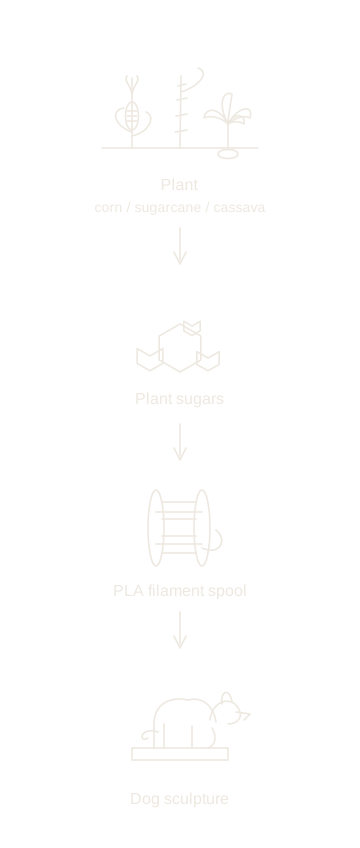
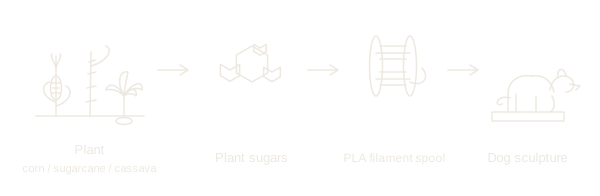
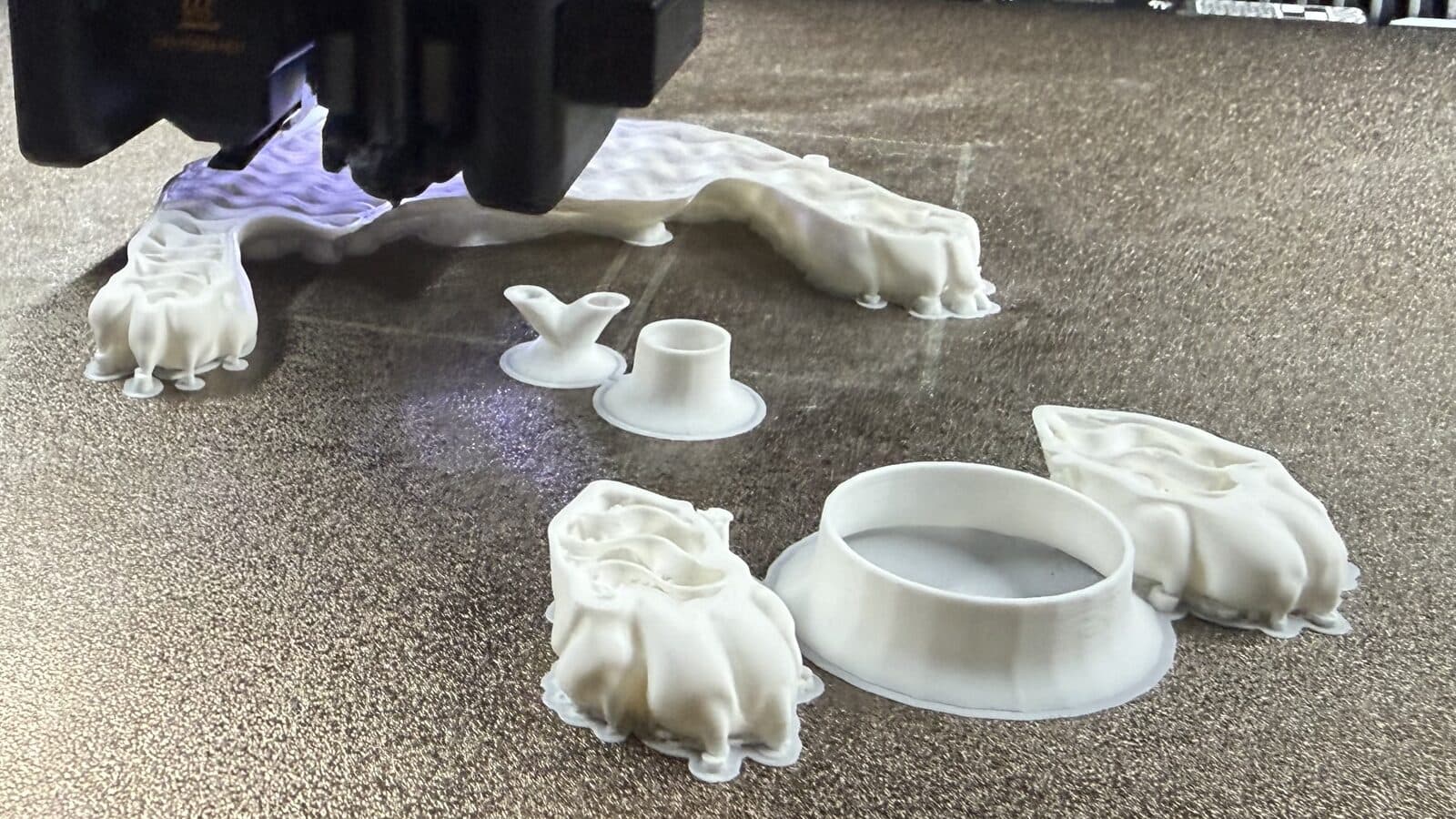
Our sculptures are printed in PLA (polylactic acid) as standard, unless an order is upgraded to another material, and we chose it with care. Unlike ABS or PETG, which are made from oil, PLA is made from plant sugars, typically from corn, sugarcane or cassava, which are fermented into lactic acid and then turned into plastic. The two largest PLA producers, NatureWorks and TotalEnergies Corbion, publish reviewed life-cycle studies reporting a lower production carbon footprint than conventional oil-based plastics. PLA also prints at lower temperatures than ABS or PETG and needs no heated enclosure, and the Bambu Lab PLA Matte and Basic we use as standard are certified to UL GREENGUARD for low emissions while printing, so there is none of the harsh smell ABS is known for. Once we have a spool for a colour, we buy that filament as refills that reuse the same spool wherever refills are available, which Bambu Lab says cuts filament packaging waste by at least 20%.
We would rather be honest than green-sounding, though. PLA is still a plastic. It won’t melt away in a garden compost heap, and it can’t go in your recycling bin. So we think the most meaningful thing we can do is make something that is never thrown away. A sculpture of your dog is made to be kept for years, not used once, and a piece that is treasured for a lifetime is the best way we know to make the material count.
SourcesNatureWorks: sustainable feedstocksNatureWorks: Ingeo eco-profileTotalEnergies Corbion: 2025 Luminy PLA LCABambu Lab: PLA BasicBambu Lab: filament temperature guideBambu Lab: reusable spool refills
Can my sculpture be composted or recycled?
Not at home, and not through your council bins, and we would rather say so plainly. PLA resin can be certified as industrially compostable (to EN 13432 in Europe and ASTM D6400 in the US), but that means specialist facilities running at high temperatures, and the resin maker itself notes that every finished product needs its own compostability testing. A solid sculpture hasn’t been through that testing, so we don’t describe our pieces as compostable or biodegradable.
In a home compost heap or in landfill, PLA barely changes. NatureWorks’ own research found it essentially stable under simulated landfill conditions, which at least means it doesn’t give off methane there. UK recycling advice from Which? is also clear that compostable plastics and rigid plastic household items don’t belong in household recycling, where they contaminate everything else.
So the honest answer is that your sculpture is made to stay with you, and we hope it never needs a bin at all.
SourcesNatureWorks: compostingNatureWorks: landfillWhich?: How to recycle in the UK
How long will a PLA sculpture last, and how do I look after it?
Kept indoors, a PLA sculpture is made to last for many years. It is a hard, stable material that takes up very little moisture and isn’t troubled by everyday household conditions. Its one real weakness is heat: PLA begins to soften at around 55–60°C, so please keep your piece away from radiators, hot car interiors and windowsills where it would sit in strong sun for hours. Long spells of sunlight and weather can also make PLA fade and turn brittle, which is why our sculptures are made for indoors as standard. If you’d like something for a garden or graveside, please talk to us first.
A soft, dry brush or a lightly damp cloth is all it needs for dusting. Please avoid solvents and strong cleaning sprays, which can mark the surface. Looked after like this, your sculpture is made to be kept, handled and loved for a very long time, and that is exactly the point.
SourcesBambu Lab: PLA Basic technical data sheetPrusament: PLA Recycled material guideBambu Lab: PLA usage guide
Guides
What a UV-engraved K9 crystal is, how a photograph becomes a piece, and how to ask for a no-obligation evaluation.
How a specialist UV laser engraves inside optical crystal, and what happens between your photographs and a finished piece.
Choosing a photo for crystal engraving
At least 4 good photographs for a likeness: the pose, a side view, a clear face, and the tail or back if it is distinctive. The form accepts up to 8.